Back
Wavy vs Curly Hair: Key Difference & Healthy Hair Care

Oct 2, 2025

7 min

Biswajit Singh

Identifying and understanding your hair type is the first step to healthy hair. While straight hair is easy to identify, the lines between wavy hair and curly hair are often blurred. So, if you’re also confused between wavy vs curly hair as your hair type, you’ve come to the right place. While they may seem similar at first glance, wavy hair and curly hair are vastly different and need different kinds of products and hair care routines. Read on to learn what differentiates the two and how you can care for them in particular.
Understanding Curly Hair

From 2C waves, we move into the curly hair territory from 3A onwards. Curly hair is all about textures, bounce and hair that’s oozing with personality. A step ahead of wavy hair, curly hair is characterised by hair strands that make a 360-degree spiral. These spirals stick together to create bouncy clusters. Due to such unique spirals, curly hair is prone to dryness, frizz and breakage and is generally more brittle than other hair types. There are different curly hair types, depending upon how tight or loose the curl pattern is.
3A
3A curly hair includes loose coils that fall from the crown. With easily manageable levels of frizz, 3A curly hair is soft and moderately dense and voluminous. It has a distinct curl definition, which helps differentiate it from 2C wavy hair.
3B
Moderately curled and defined, 3B lies in the middle of 3A & 3C curly hair and has more definition and bounce than 3A curly hair, with coils resembling a corkscrew. With tighter curls, the 3B hair type is more prone to dryness than 3A hair.
3C
3C curly hair has the smallest and tightest curls, resembling a spring. The coils can be as tight as the circumference of a pencil. 3C hair is extremely dense and voluminous. This also makes it the most prone to frizzy hair and in need of extra care.
Understanding Wavy Hair

Not straight and yet not curly, wavy hair lies somewhere in the middle of straight and curly hair. It combines the best of both, with more volume than straight hair and yet a more refined texture than curly hair. There are many different patterns of waves, the most common being S-shaped waves. Many mistake wavy hair for perennially frizzy hair, but with the right care, you can rock healthy, defined waves everyday! Here are some different types of wavy hair to help you understand the difference between wavy hair vs curly hair better.
2A
2A wavy hair type is usually fine or thin and the straightest among all wavy hair types. It hence lacks volume but has elongated waves which are soft, shiny and easier to style.
2B
This wavy hair type is more defined, with shorter waves. And more bounce. It rocks beachy waves with a loose S-shaped wave pattern.
2C
The 2C wavy hair type is the most coarse and dense among all, holding a perfect S shape. It is also prone to dry frizzy hair and hair breakage.
Key Difference Between Wavy vs Curly Hair
Wavy hair and curly hair are both very similar, and many of us often end up confused about what our real hair type is. Many who actually have wavy or curly hair even mistake it for simply frizzy hair because they’ve never used hair products and hair care routine made specifically for their hair type. To identify whether your locks are wavy or curly, there are a few telling signs that you can look out for.
1. Shape
The most noticeable difference between wavy hair vs curly hair is the shape of the hair strands. While wavy hair has loose, S-shaped strands, curls are usually shaped like ringlets or springs, with an extra dose of bounce and style. Waves tend to start closer to the mid-lengths rather than the roots, giving the hair a soft, flowing look, while curls form more defined loops or spirals that can start forming right from the roots. With tighter curl patterns, curly hair naturally appears more structured and springy compared to the relaxed, beachy movement of wavy hair.
2. Texture
When comparing wavy versus curly hair, another important thing that stands out is the texture of the hair strands. Wavy hair is generally smoother and finer, getting denser as we move from 2A to 2C. In contrast, curly hair is much denser and coarse to the touch, which only increases as we go from 3A to 3C curl types. If not well moisturised, curly hair tends to feel very dry and rough, as the natural oils from the scalp struggle to travel from roots to tips because of the twists and turns. The difference in shape thus impacts this difference in texture and is one of the reasons curly hair often requires richer, more nourishing products.
3. Volume
Finally, the coilier the shape of your hair strands and the denser its texture, the more voluminous it will be. Your tresses can seem full and airy or have thinner clusters with a flatter look. Wavy hair tends to have a moderate amount of body, while curly hair naturally creates more lift and fullness because each curl takes up more space and stacks upon adjacent curls. At the end of the day, your hair volume will always depend on your hair type and, especially, your haircare routine and styling routine.
Wavy & Curly Hair Care Routine

The products and the haircare routine that you use make a huge impact on how your waves and curls look and feel. It can make your tresses go from dry frizzy hair to healthy, bouncy waves and curls. In contrast with straight hair, wavy hair and especially curly hair need a regular boost from special hair products like hair gel, curl cream, leave-in conditioner, etc., to maintain that definition and keep them moisturised. Here are some wavy and curly haircare tips to get you on the right track.
1. Use Curly Hair Products
Always go for products specially formulated for wavy and curly hair. These formulas are usually lightweight, richer in moisture, gentler in cleansing, and packed with ingredients that support natural shape and definition. There’s a variety of different products you can go for, like curl creams, curling gels, leave-in conditioners, mousse, etc., based on how you want to style your tresses.
2. Deep Condition Regularly
As wavy and curly hair is particularly prone to frizz and dryness, one of the best frizzy hair remedies is to use a nourishing hair oil to lock in the moisture and make sure your scalp is not stripped of all its natural oils. You can go for a store-bought hair mask or even make your very own diy hair mask with ingredients from your kitchen. Apply the hair mask to your scalp and lengths, and let it sit for 20-30 minutes. Rinse it off after and style your hair any way you like! Make sure to follow this ritual weekly for healthy, hydrated hair.
3. Use a Nourishing Hair Oil
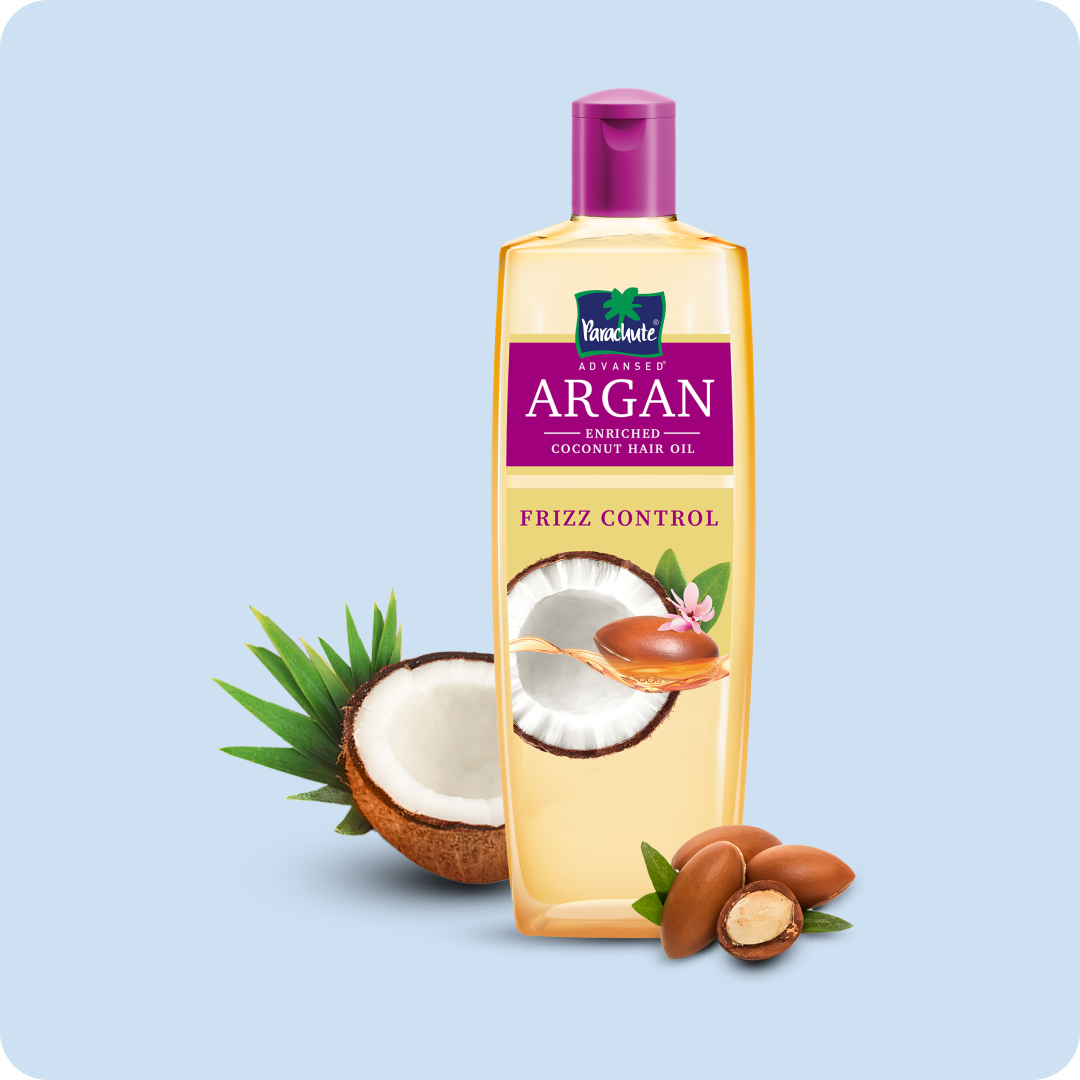
When your hair goes dry, rough and frizzy easily, you need to make sure you’re using a good hair oil to help. One thing common in the wavy hair vs curly hair debate is that both need hair oil! A great option to tame that frizz in your wavy/curly hair is the Parachute Advansed Argan Enriched Coconut Hair Oil for frizz control and 2x smoother hair. The argan oil benefits for hair are abundant, and argan is an important ingredient to add to your routine. Oiling hair is the age-old frizzy hair remedy that will never go out of fashion!
4. Protective Hairstyles
Protective frizzy hairstyles will keep your strands safe from friction, weather, and everyday wear and tear. Styles like loose braids, pineapple updos, or low buns help preserve your curl pattern while reducing breakage and tangling. These hairstyles are especially helpful at night or during active days when your hair is more prone to getting snagged or frizzy.
Conclusion
Wavy and curly hair each have their own charm, and understanding their differences helps you care for them with confidence. With the right products, gentle routines, and a little extra moisture, your natural texture can look its healthiest and most defined. Whether your hair forms soft waves or springy curls, embracing what makes it unique is the key to keeping it strong, happy, and beautiful!
Frequently Asked Questions
- Can I use heat tools on wavy or curly hair?
Yes, but always use a heat protectant and keep temperatures moderate.
- How do I revive my hair the next morning?
Spritz your hair with water or a curl refresher and reshape waves or curls with your fingers.
- What type of haircut works best for textured hair?
Layered cuts help enhance natural movement and prevent heavy, flat sections.
- How do I protect my waves or curls while exercising?
Use loose styles like a pineapple or soft braid to minimise friction and sweat impact.
- How often should I wash wavy/curly hair?
Curly & wavy hair does not need to be washed as often as straight hair. 1-2 times a week is enough, as overwashing will cause dryness.
Disclaimer:
Our team picks and curates content we think you will like. Opinions expressed within the content are the creator’s views and do not reflect the opinions and beliefs of the website or that of Parachute Advansed.

SHARE NOW


Vitamin E for Hair: Benefits & How to Use it
Explore the top 5 benefits of vitamin E for hair, including promoting scalp health, boosting growth, reducing greying, and improving hair quality. Learn how to add vitamin E to your routine for healthier, stronger hair.
Sep 2, 2025
10 mins
SHARE NOW
Aloe Vera for Scalp: The Magical Benefits of Aloe Vera Hair Oil for Scalp
Experience the wonders of aloe vera for scalp health. Learn how aloe vera hair oil soothes, nourishes, and promotes a healthy scalp for stronger, shinier hair.
Feb 23, 2023
10 mins
SHARE NOW
Best Hair Care Routine for Healthy Hair (Step-by-Step Guide)
Follow this 6-step hair care routine to keep your hair strong, shiny, and healthy. Discover expert tips for the perfect hair care regimen.
May 7, 2024
9 min
SHARE NOW
5 Common Causes and Solutions for Itchy Scalp
Struggling with an itchy scalp? Uncover the 4 common causes of an itchy head and explore effective solutions for relief. Learn how to address scalp itching problems.
Jun 21, 2024
9 min
SHARE NOW

Benefits of Scalp Massage for Hair Growth
Unlock the benefits of scalp massages for hair growth. Improve circulation, boost hair health, and promote growth with this simple routine.
Aug 6, 2024
7 min
SHARE NOW